
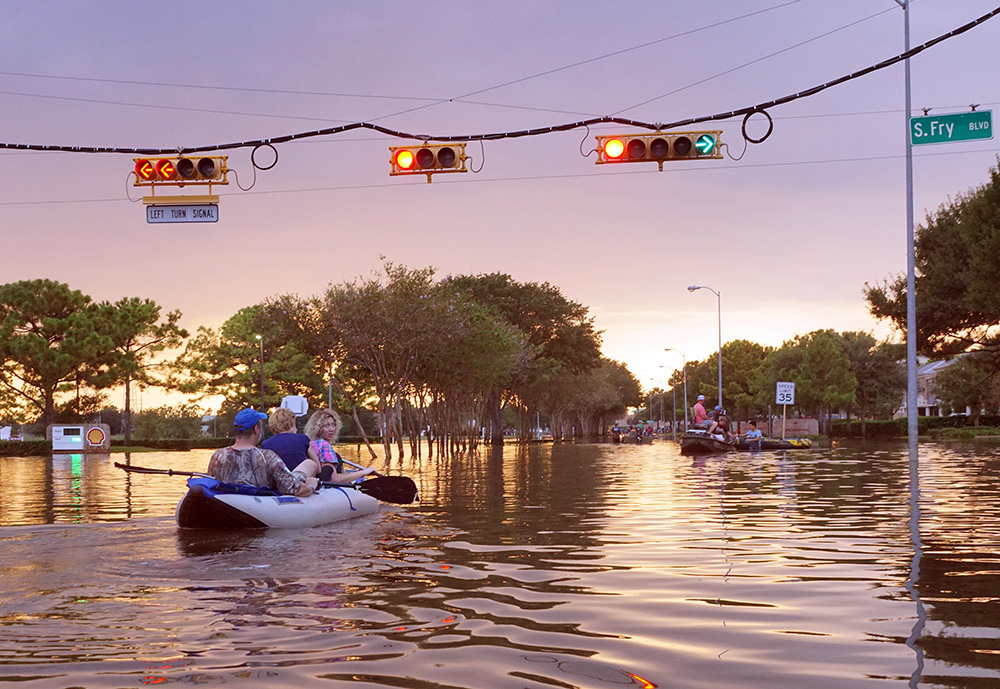
As hurricane season looms each year along the Gulf Coast, the responsibility of preparation doesn’t fall solely on individual homeowners—it increasingly rests on the shoulders of HOA boards tasked with protecting entire communities.
From safeguarding shared infrastructure to making timely decisions that impact budgets, safety, and recovery timelines, HOA leadership plays a critical role in how neighborhoods across Greater Houston weather natural disasters. And with storms growing more unpredictable, the need for informed, coordinated response planning is becoming less of an option and more of an expectation.
In response to this growing need, HOA Connect Houston is hosting its April 2026 Workshop: Natural Disaster Preparedness and Response in Your Community, designed specifically for HOA board members across the Greater Houston area.
The free workshop will take place on Thursday, April 30, 2026, from 6–8 PM at the Fort Bend County Office of Homeland Security & Emergency Management (307 Fort St., Richmond, TX 77469).
The event is structured as a hands-on learning experience, bringing together industry professionals, government officials, and local leaders who each play a role in disaster readiness and recovery.
A Multi-Layered Approach to Community Protection
What makes this workshop particularly valuable is the range of expertise represented—each speaker offering insight into a different piece of the preparedness puzzle.
Fort Bend County Office of Emergency Management (OEM), represented by Greg Babst, plays a central role in coordinating disaster response efforts across the county. OEM works behind the scenes to manage emergency operations, resource allocation, and communication during crises—making their guidance essential for HOAs seeking alignment with local emergency protocols.
City of Fulshear leadership, including Mayor Don McCoy, brings a municipal perspective—highlighting how city planning, infrastructure investment, and public policy intersect with HOA-level decisions. As communities expand rapidly in Fort Bend County, collaboration between cities and HOAs is becoming increasingly important.
From a financial and regulatory standpoint, the Texas Department of Insurance (TDI), represented by Andrew Davis, provides insight into insurance considerations, claims processes, and how communities can better position themselves to avoid costly gaps in coverage.
On the private sector side, professionals like Clayton Townsend of E.N.G. Roofing and Clay Morris of Yellowstone Landscape offer practical, boots-on-the-ground expertise. Roofing and landscaping are among the most commonly impacted elements during storms, and both industries play a critical role in mitigation, damage assessment, and long-term resilience.
E.N.G. Roofing specializes in storm restoration and roofing solutions, helping communities navigate repairs and insurance coordination after severe weather events. Meanwhile, Yellowstone Landscape, a national provider of commercial landscaping services, focuses on maintaining and restoring outdoor environments—key to preventing drainage issues and minimizing flood risks.
Together, these perspectives reflect a comprehensive approach: preparation isn’t just about one decision—it’s about aligning multiple systems before a storm ever forms.
What HOA Leaders Will Learn
The workshop is designed to deliver actionable insights that HOA board members can immediately apply within their communities.
Topics include:
-
Hurricane preparedness timelines and what HOAs should have in place before June 1
-
Storm damage prevention and repair strategies, particularly for roofing and landscaping
-
Real-world emergency planning, including coordination with local agencies
-
Financial preparedness, helping HOAs protect reserves and avoid unexpected assessments
For many board members—especially those serving in volunteer roles—this type of guidance can help turn uncertainty into confidence.
Building Stronger, More Resilient Communities
Disaster preparedness is about more than reacting to emergencies—it’s about protecting the long-term stability of a neighborhood.
Well-prepared HOAs not only reduce risk, but also build trust among residents. Clear plans, timely communication, and visible leadership during challenging moments can strengthen a sense of community and reassurance.
As development continues across Greater Houston, particularly in high-growth areas like Fort Bend County and Montgomery County, the expectations placed on HOA boards are evolving. Residents are looking for leadership that is not only responsive, but forward-thinking.
Events like the HOA Connect Houston workshop reflect a broader shift—one where education, collaboration, and preparedness are becoming essential tools for community success.
What Happens Next